
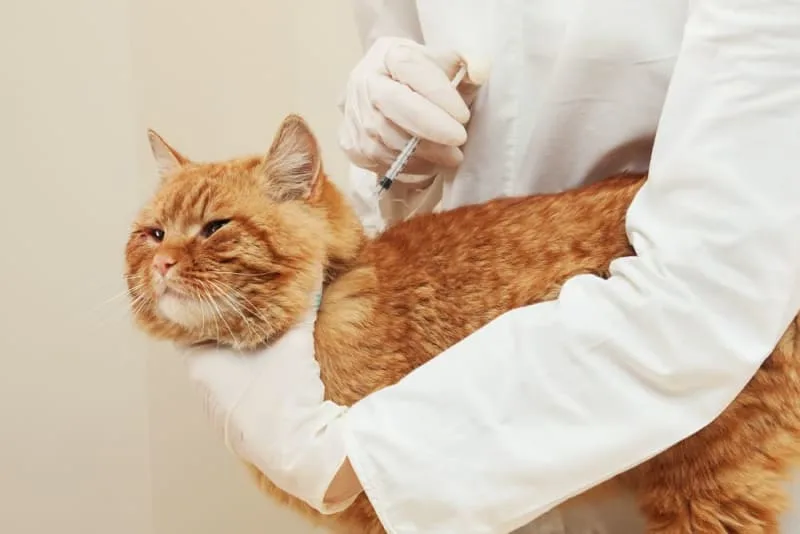
Vaccinations offer your cat or kitten protection against a host of serious diseases and illnesses. Here we provide an outline of recommended vaccines and why your cat needs them.
What shots do cats and kittens need?
There may be variations in schedules due to factors such as pre-existing health conditions and indoor/outdoor living situations. We've provided an approximate schedule below, based on an average indoor cat. Your vet can provide specific information and the schedule they recommend for your unique pet.
Kitten Vaccination Schedule
6 - 10 Weeks
FVRCP for Rhinotracheitis, Calicivirus, Panleukopenia (also known as feline distemper)
Rabies vaccine*
FeLV Feline leukemia
FIV Booster for Feline immunodeficiency virus
Feline herpesvirus
Bordatella
Chlamydia
11 - 14 Weeks
FVRCP for Rhinotracheitis, Calicivirus, Panleukopenia (also known as feline distemper)
FeLV Feline leukemia
FIV Booster for Feline immunodeficiency virus
15+ Weeks
FVRCP final booster for Rhinotracheitis, Calicivirus, Panleukopenia (also known as feline distemper)
FeLV Feline leukemia
FIV Booster for Feline immunodeficiency virus
Adult Cat Vaccination Schedule
Annually
Rabies vaccine*
FeLV Feline leukemia
Bordatella
Every 3 Years
Panleukopenia (feline distemper)
Calicivirus
Feline herpesvirus
*Rabies: Rabies is 100% fatal. There is no treatment is available, and it's contagious. Prevention is crucial. The rabies vaccination may be required annually or every 3 years, depending on the vaccine used.
Other Vaccinations
Your vet may recommend other vaccinations outside of this list, depending on where you live, your cat's history, risk levels for certain diseases, and other factors. Always follow your vet's recommendation for the best care for your cat or kitten.
Possible Side Effects
Most cats will not have major side effects from their vaccinations. However, if you notice any of the following side effects, contact your vet immediately to determine if other treatment may be necessary.
High fever
Vomiting or diarrhea
Immobility or limping
Lethargy
Swelling near the area of injection
Loss of appetite
Why to Get Your Cat Vaccinated
Your feline friend depends on you to provide the care that will help them live long, healthy life. Vaccinations are a preventive approach to avoid serious, and sometimes fatal, diseases. Avoiding getting ill is always better than having to treat a disease once your pet has contracted the illness.
Vaccines are important for all cats and kittens, whether your is an indoor or outdoor cat they need to be vaccinated.
Speak with your vet to determine the right vaccination schedule for your cat or kitten.
If your cat or kitten is due for their vaccinations, contact our Sacramento vets today to get started.